The Gallery Walk That Changed Everything
Picture this: you’re standing in front of a massive canvas covered in what looks like angry scribbles. The wall text mentions “post-structuralist deconstruction” and “liminal spaces.” You feel like an art fraud. Everyone else nods knowingly while you wonder if the emperor’s new clothes situation is happening again.
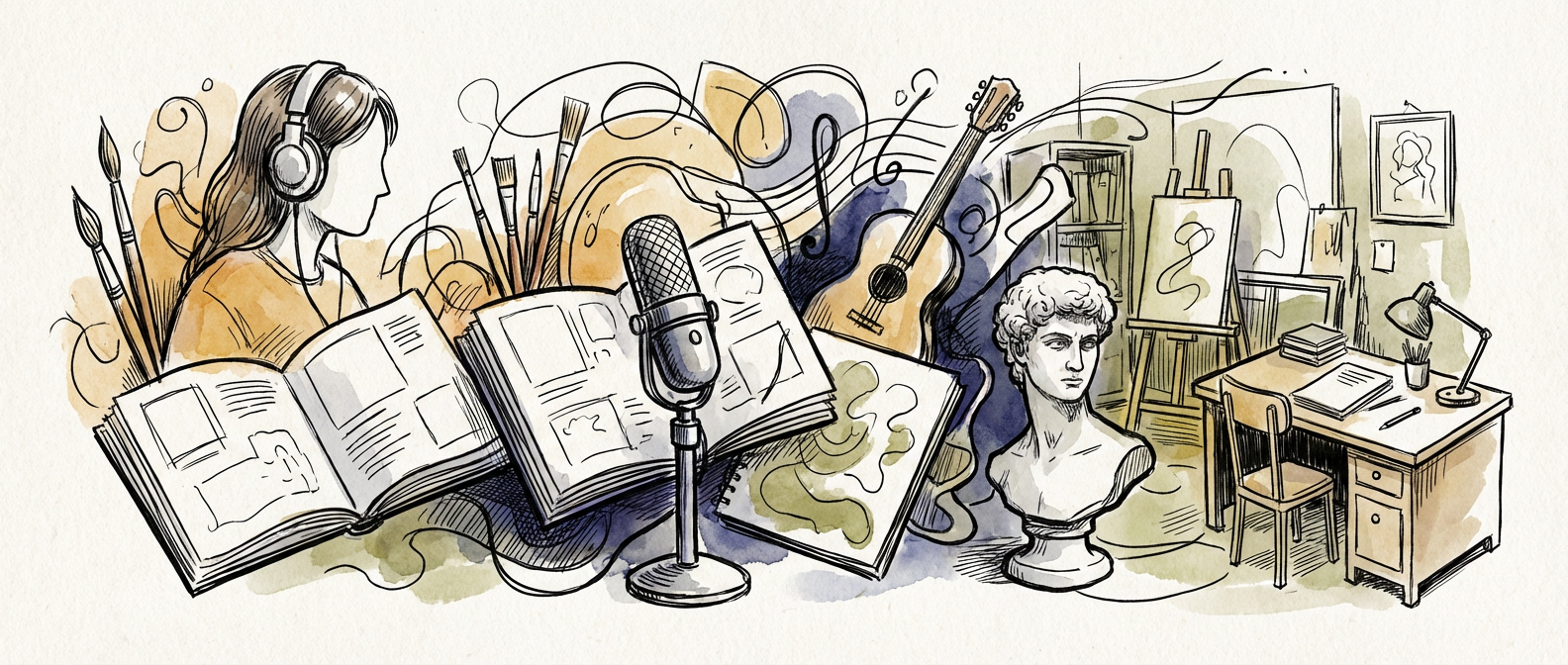
Here’s the thing nobody tells you about contemporary art: the best way in isn’t through intimidating academic texts or pretentious gallery talks. It’s through artist interviews. Real conversations where creators drop their guard and explain what the hell they were actually thinking.
I figured this out during a disastrous gallery opening in Chelsea. Surrounded by people discussing “gestural authenticity,” I escaped to the bathroom and stumbled across a podcast interview with the featured artist. Those angry scribbles suddenly made complete sense. They weren’t about art theory at all. They were about the artist’s grandmother’s handwriting, deteriorating with dementia. In thirty minutes of honest conversation, the work transformed from academic exercise to human document.

Breaking Down the Artistic Fortress
Artist interviews strip away the institutional layers that make contemporary art feel inaccessible. When Artforum reviews that same painting, you get dense paragraphs about “mark-making strategies” and “phenomenological encounters.” When the artist talks about it directly? You hear about late-night studio sessions, failed experiments, and the moment everything clicked.
This isn’t dumbing down, it’s getting to the source. Artists rarely speak in the academic jargon that surrounds their work in museums and magazines. They talk about materials, process, influences, failures. They reveal the human decisions behind abstract concepts. Why this color? What happened when they tried the opposite? How did their divorce mess with the entire series?
The art world loves its mystique, but interviews puncture that bubble completely. They reveal artists as working people with bills to pay, studio problems to solve, and ideas that don’t always translate perfectly into reality. This doesn’t diminish the work. It makes it more powerful because you understand the intelligence and intention behind it.
Finding the Conversations That Matter
Here’s the problem: not all artist interviews are worth your time. Skip the promotional fluff pieces that read like press releases. Avoid anything where the interviewer seems more interested in showing off their vocabulary than understanding the work. The best interviews have some friction. They push back. They ask about failures and contradictions.
Start with Artsy’s artist interview archive. Their conversations are usually substantial without being academic. Frieze publishes excellent long-form interviews that dig into process and philosophy. For video content, Louisiana Channel offers intimate studio visits that show artists in their actual working environments.
Don’t overlook podcasts, either. “A Piece of Work” breaks down individual artworks through conversations with their creators. “The Modern Art Notes Podcast” has in-depth discussions with both emerging and established artists. These formats allow for the kind of wandering conversation where real insights emerge.
Local art publications often publish the most revealing interviews because they’re less worried about maintaining institutional relationships. Regional magazines and university publications frequently let artists speak more freely about commercial pressures, gallery politics, and the actual realities of sustaining a creative practice.
Decoding What Artists Really Mean
Artists speak in code sometimes, but it’s learnable code. When they mention “exploring materiality,” they’re usually talking about messing around with different mediums until something interesting happens. “Investigating themes of identity” often means working through personal experience or family history. “Responding to the current political moment” typically means work made in reaction to specific events or cultural shifts.
Pay attention to process descriptions. When an artist explains their daily routine, material choices, or studio setup, you’re getting insight into how ideas become objects. These practical details often reveal more about artistic intention than any theoretical discussion.
Listen for influences they mention casually. Artists typically name-drop other artists, writers, musicians, or filmmakers who shaped their thinking. These references become your research roadmap. If a painter mentions being influenced by Andrei Tarkovsky films, watch “Stalker.” If they reference Ursula K. Le Guin, read “The Dispossessed.” Following these trails deepens your understanding of their visual choices.
Notice what they don’t say as much as what they do. Artists often downplay commercial considerations or institutional pressure, but these forces absolutely shape artistic decisions. Reading between the lines helps you understand the full context of how contemporary art gets made and shown.
Building Your Own Artistic Intelligence Network
Once you start following artist interviews regularly, patterns emerge. You’ll notice recurring themes, shared influences, and ongoing debates within different art communities. This builds your ability to put new work in context and understand how contemporary art conversations actually develop.
Create a simple system for tracking interesting artists and their influences. When someone mentions a book, film, or historical artist that shaped their work, jot it down. These connections help you build a web of understanding that makes each new encounter with contemporary art more meaningful.
Don’t limit yourself to visual artists, though. Interviews with musicians, writers, filmmakers, and designers often reveal similar creative processes and shared cultural influences. Contemporary artists frequently work across disciplines, and understanding these connections makes your perspective on all forms of creative work richer.
The goal isn’t to become an expert overnight. It’s to develop confidence in your own ability to understand and evaluate contemporary art based on direct engagement rather than received wisdom. Artist interviews provide that direct line to creative thinking without requiring years of art school or museum studies.
Start with one interview this week. Pick an artist whose work you’ve seen but didn’t quite get. Listen to them explain their process, their influences, their failures. Notice how your perception of their work shifts when you understand the human story behind it. That shift is your entry point into a much larger conversation that’s been waiting for your voice.
