The Myth of Meritocracy in White Cube Spaces
Walk into any blue-chip gallery in Chelsea or Mayfair and you’ll witness theater masquerading as cultural exchange. The pristine white walls, the hushed reverence, the strategically placed price lists available only upon inquiry. This isn’t art appreciation. It’s luxury retail with a graduate degree.
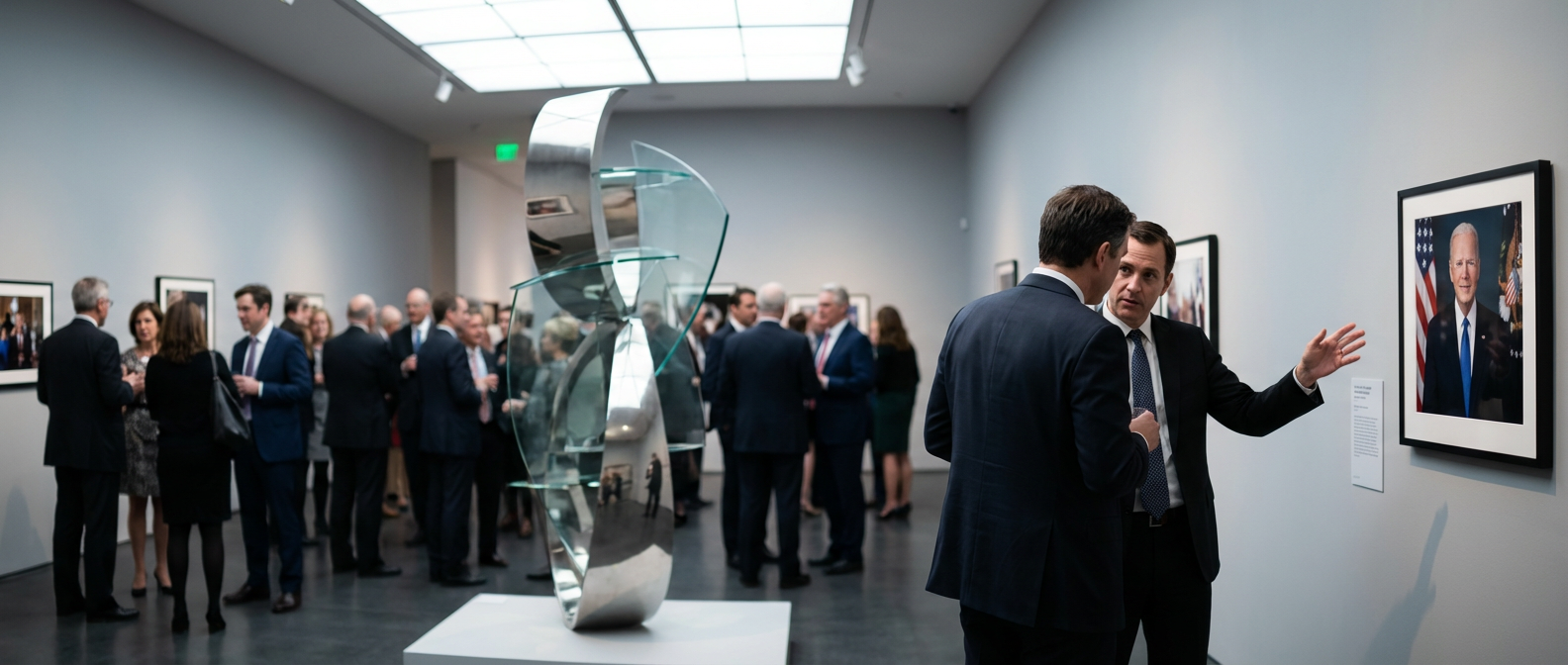
The contemporary gallery system has mastered manufactured scarcity. Galleries like David Zwirner or Gagosian don’t just sell paintings. They sell access to an exclusive club where cultural capital translates directly into financial returns. The waiting lists, the invitation-only previews, the mysterious “sold before opening” red dots. None of this reflects organic demand. It’s calculated marketing designed to inflate both prices and egos.
Consider how galleries routinely reject museum loan requests to maintain artificial market pressure. When the Whitney wanted to borrow a Christopher Wool painting for a retrospective, several galleries declined, citing “collector concerns.” Translation: public exposure might democratize appreciation and threaten the precious exclusivity that drives seven-figure sales.
This isn’t curatorial vision. It’s venture capitalism wearing a beret.

The Collector-Industrial Complex
Behind every gallery’s roster lurks a shadow network of mega-collectors who work less as patrons and more as puppet masters. François Pinault, Eli Broad, and their ilk don’t collect art. They collect artists’ entire careers, manipulating markets with the cold efficiency of hedge fund managers.
The system works like this: A collector buys deeply into an emerging artist’s work, often purchasing 20-30 pieces. The gallery then orchestrates museum shows, critical attention, and strategic resales to inflate the artist’s market. The collector’s early purchases become blue-chip investments, while the artist gets trapped in a golden cage, pressured to produce variations on whatever initially caught the collector’s eye.
Look at how Damien Hirst’s career trajectory mapped perfectly onto Charles Saatchi’s acquisition strategy. Saatchi didn’t discover Hirst’s genius. He manufactured it through calculated market manipulation and media orchestration. The shark in formaldehyde wasn’t revolutionary art. It was sophisticated branding.
Meanwhile, artists whose work doesn’t fit neatly into investment portfolios languish in obscurity, regardless of their innovation or cultural relevance. The market doesn’t reward artistic merit. It rewards marketability.
Geographic Gatekeeping and Cultural Colonialism
The contemporary art world’s obsession with a handful of geographic centers reveals its fundamental provincialism. New York, London, Berlin. Everything else is periphery, waiting for validation from these self-appointed cultural capitals.
This geographic hierarchy operates as cultural colonialism. Artists from Lagos, São Paulo, or Mumbai must conform to Western aesthetic and conceptual frameworks to gain international recognition. The Venice Biennale and Documenta, supposedly celebrating global artistic diversity, consistently favor work that speaks fluent “international art world” over genuinely local artistic languages.
Galleries exploit this dynamic ruthlessly. They cherry-pick artists from the Global South, strip away cultural specificity, and repackage their work for Western consumption. The artist’s background becomes exotic seasoning on an otherwise familiar dish designed for collector palates educated exclusively on European and American art history.
When Kehinde Wiley paints African immigrants in classical European poses, critics celebrate his “subversion” of art historical tropes. But this framing still centers European traditions as the baseline against which all other expressions are measured. It’s inclusion theater that reinforces existing hierarchies while appearing progressive.
The Institutional Capture
Museums, supposedly bastions of public cultural education, have become willing accomplices in this financialization. Board compositions read like Forbes lists, with trustees leveraging institutional prestige to validate their private collections. The Broad Contemporary Art Museum exists primarily to showcase Eli Broad’s personal acquisitions. The François Pinault Collection occupies prime Venice real estate, transforming a public cultural institution into a private showcase.
Curators, once scholars and cultural advocates, now work as sophisticated salespeople. Their scholarly credentials provide intellectual cover for market-driven programming decisions. When a museum organizes a retrospective of an artist heavily represented in trustee collections, they call it curatorial vision. When galleries coordinate museum shows with major sales, they call it cultural dialogue.
The revolving door between museums and commercial galleries has accelerated this corruption. Former MoMA curator Klaus Biesenbach now directs MOCA while maintaining extensive gallery relationships. Former Whitney curator David Kordansky opened his own gallery, leveraging institutional connections built with public money to launch a private enterprise.
This isn’t cultural stewardship. It’s insider trading with cultural capital as currency.
Reclaiming Artistic Discourse
The current system’s stranglehold on artistic discourse isn’t inevitable. Alternative models exist, thriving in spaces the market hasn’t yet colonized. Artist-run spaces, community galleries, and digital platforms create genuine cultural exchange without six-figure price tags.
Projects like the collectively-run Regina Rex in Queens or the itinerant exhibitions organized by Practice prove that meaningful artistic dialogue doesn’t require marble floors and champagne receptions. These spaces prioritize artistic experimentation over market viability, creating environments where genuine innovation can flourish.
The real revolution won’t come from within existing institutional structures. It will emerge from artists and communities who reject the gallery system’s fundamental premises. Who insist that cultural value can’t be measured in auction results. Who create new frameworks for artistic appreciation and support.
The question isn’t whether the current system will collapse under its own contradictions. The question is what we’ll build to replace it. The conversation starts now, in the spaces between the red dots, where art still has the potential to transform rather than merely transact.
