When Christie’s Sold the Future, Museums Lost the Plot
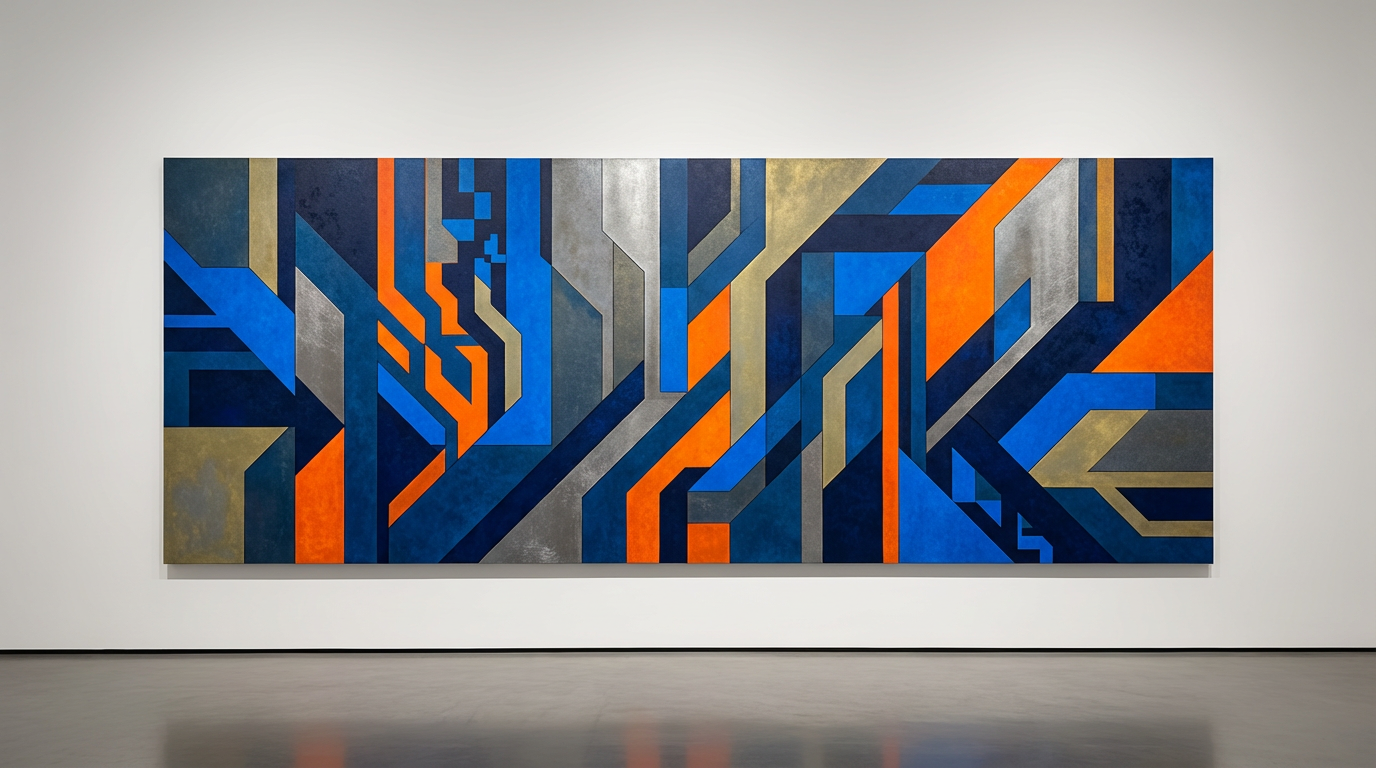
Last November, Christie’s gavel came down on “Echoes of the Unseen,” an AI-generated work by the collective Obvious, and the hammer price was $6.2 million. Not thousands. Millions. This wasn’t some fringe gallery stunt or crypto-adjacent nonsense relegated to the digital underground. This was the auction house that sold the Rosetta Stone selling algorithmic output at prices that would make most living painters weep into their studio coffee. The art world had its 2018 “Belamy” moment again, except this time nobody could pretend it was a novelty.
That sale wasn’t a blip. It was a structural shift disguised as a headline. Museums worldwide are now facing an extinction event dressed up as opportunity, and most curators haven’t finished reading the memo.
The Curator’s Reckoning Is Already Here
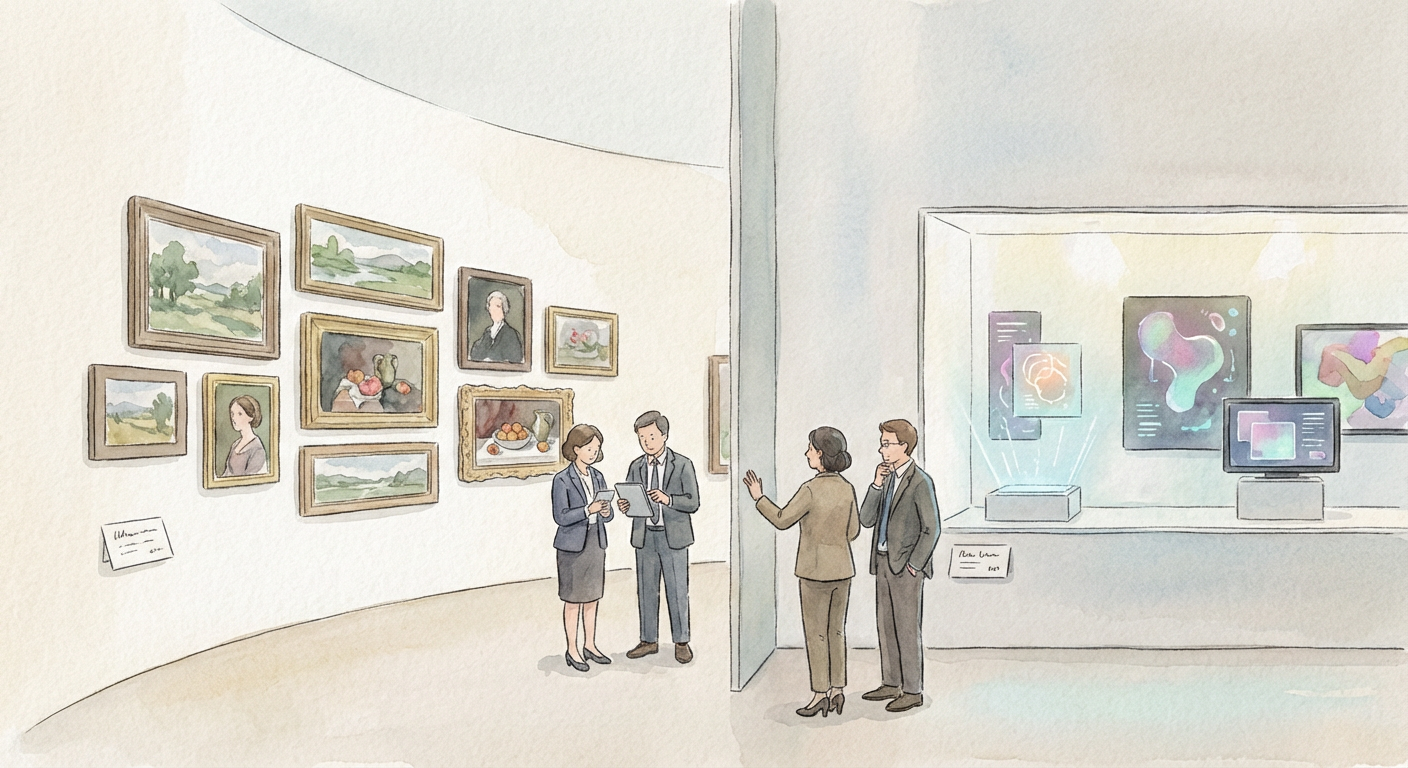
An Art Newspaper survey published in January 2026 found that 67 percent of museum curators globally believe AI-generated works should be categorized separately from human-made art in permanent collections. Read that number again. Two-thirds of professional custodians of culture are already drawing the line. They’re not saying AI art is worthless or invalid. They’re saying it belongs in a different taxonomy. That’s not conservative gatekeeping. That’s institutional triage.
The College Art Association didn’t mince words either. In February 2026, they released a formal position paper with actual standards. They recommended mandatory disclosure requirements for auction houses, demanding that AI-assisted works be labeled with a minimum 12-point font notation. Twelve-point font. That’s the same size they use for artist names. The regulation was designed to be impossible to ignore, which tells you everything about how thoroughly the art market had been burying the distinction.
What’s being negotiated right now isn’t whether AI art exists or has value. It’s who gets to decide what gets filed where, and whether those decisions are made transparent or shrouded in market mechanics. Museums understand that archival integrity is everything. Once you admit something to the permanent collection, you’re making a statement that echoes across centuries. You can’t unsay that.
Follow the Money, Then Follow the Legislation
Sotheby’s reported a 41 percent surge in AI art consignments between the first quarter of 2025 and the first quarter of 2026. Average hammer prices climbed from $18,000 to $74,000 in that same window. The market isn’t stabilizing. It’s accelerating. Galleries that were skeptical eighteen months ago are now aggressively acquiring AI work because the financial trajectory is undeniable. Scarcity, novelty, cultural moment momentum. Classic speculative pattern.
Meanwhile, UNESCO’s 2025 Global Report on AI and Cultural Heritage identified 23 countries actively introducing or drafting legislation specifically addressing AI-generated art’s intellectual property status. Twenty-three. That’s not scattered policymaking. That’s coordinated institutional response. When governments start writing laws about something, the art world stops pretending it’s a philosophical abstraction and starts lawyering up.
You can access Christie’s full documentation through their Christie’s AI Art Sales Archive, which now reads like a historical record of the moment the market finally admitted what it had been doing. The transparency is welcome. It’s also a bit late.
What Museums Actually Need to Do (Before It’s Too Late)
The stakes for curators are brutally clear now. You either establish your own criteria for accession immediately, or the market establishes it for you. The College Art Association Position Statements provide a starting framework, but a framework isn’t enough. Your institution needs a working definition of what constitutes human authorship for your collection. Not a philosophical one. A practical one.
The old system where a museum could simply trust provenance and market reputation to do the heavy lifting? That’s dead. It didn’t die because AI art is inherently superior or inferior to human-made work. It died because the financial incentives suddenly aligned to make that distinction profitable for sellers. Museums became the backstop for value creation, the place where speculation transforms into legitimacy through acquisition.
The curators surveyed by Art Newspaper understood something crucial: separating AI work isn’t about purity. It’s about honesty. It’s about your permanent collection not becoming a speculative asset class masquerading as cultural stewardship. Every piece you add to those walls becomes part of your institution’s authority. That authority is either real or it isn’t.
The Conversation Keeps Going
This isn’t settled. The museum world hasn’t spoken with one voice. Some institutions will embrace AI art fully. Some will reject it entirely. Most will do what institutions always do: hedge, equivocate, and wait to see what the prestigious places do first. The window for that paralysis is closing, though.
What’s your institution doing? What should they be doing? Have you walked through a museum recently and noticed where they’re starting to hang algorithm-generated work? The real story isn’t in the price tags at Christie’s. It’s in the acquisition committees meeting right now, trying to figure out what a collection even means anymore.
