The Ruling That Breaks the Internet’s Fever Dream
February 2026 arrived with a court decision that felt like someone finally turned off the reality distortion field we’ve been living in since ChatGPT dropped. The U.S. Court of Appeals upheld what the Copyright Office has been quietly insisting all along: AI-generated images without demonstrable human creative authorship cannot receive copyright protection. No registration. No legal standing. No way to monetize it as your own intellectual property.
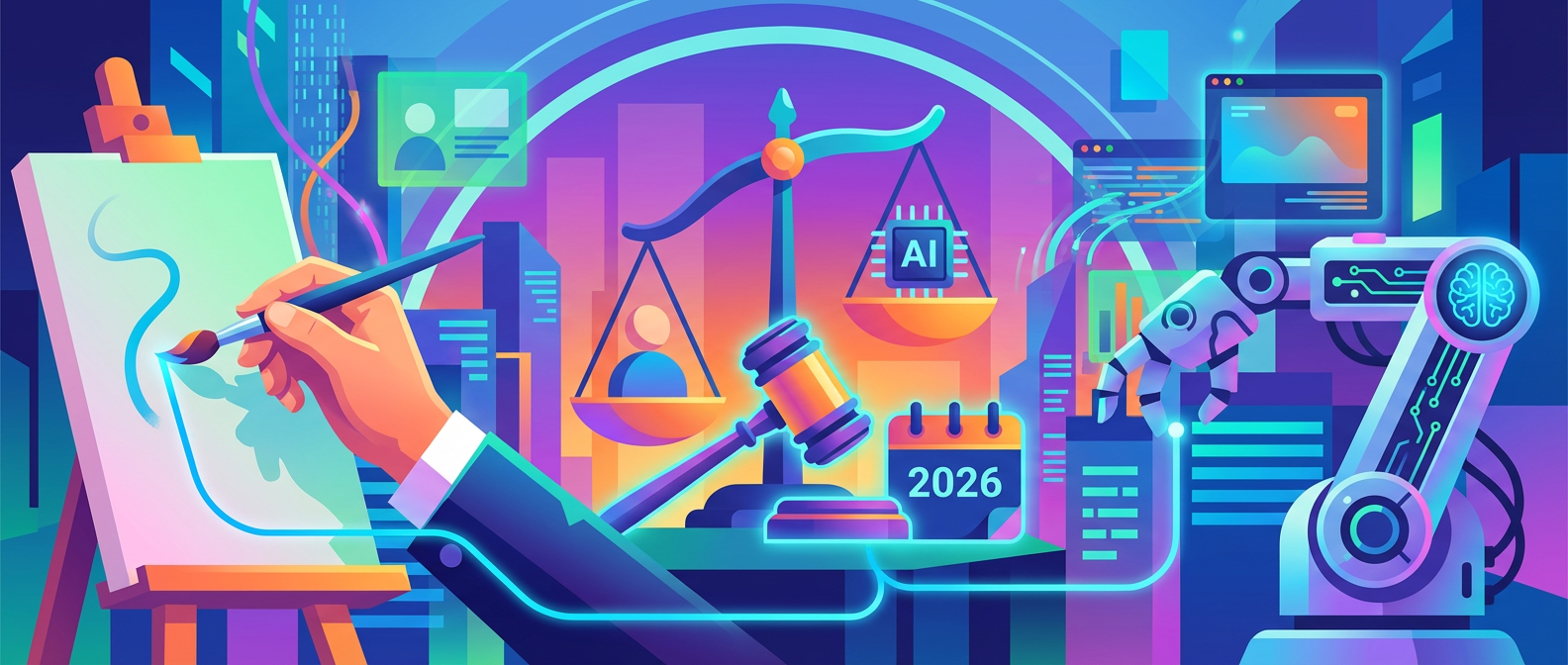
This is not a small thing. This is the moment the legal system caught up to what actual working artists have known in their bones for three years. An image conjured entirely by typing a prompt into Midjourney? Uncopyrightable. A collage built by feeding reference materials into Stable Diffusion? Uncopyrightable. But here’s where it gets interesting: a work that involved genuine human creative decision-making, artistic intention, and labor input can still be protected. The line got drawn.
Before you dismiss this as another legal technicality destined for a three-paragraph news brief, understand what just happened. The Copyright Office received over 10,000 applications between 2023 and 2025 involving AI-generated content. They registered a fraction of them, only the ones where an actual human made identifiable creative choices. The rest? Denied. This wasn’t one case. This was institutional policy meeting judicial approval.
What the Numbers Actually Tell Us
Here’s where the rubber meets the road. A 2025 ArtNet survey of 1,200 working artists revealed that 67% reported direct income loss because clients replaced commissioned work with AI-generated imagery. That’s not speculation. That’s not anecdotal coffee shop complaining. That’s two-thirds of a representative sample watching their invoices shrink because a marketing director discovered they could generate stock images for free instead of hiring an illustrator.
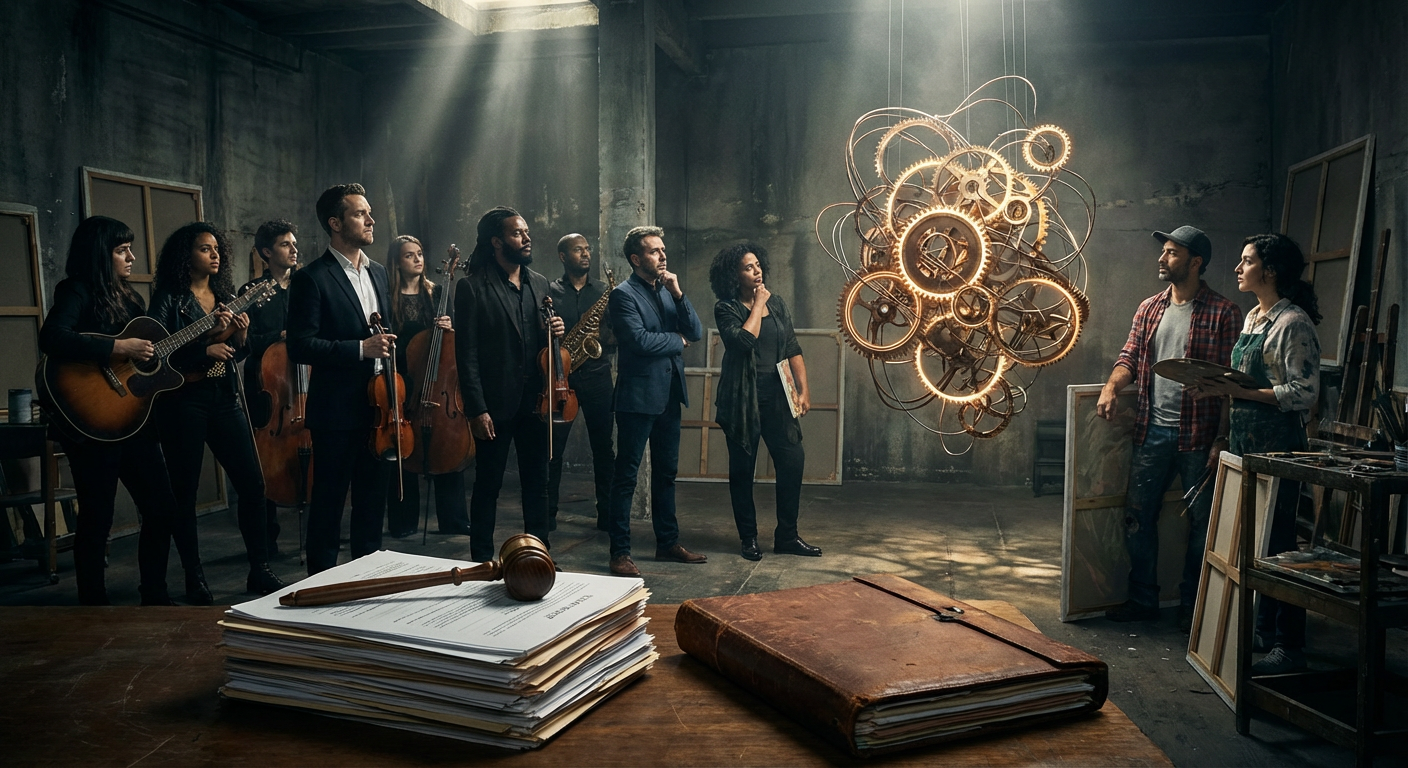
The Artists Rights Alliance, representing more than 30,000 musicians and visual artists, didn’t sit quietly during the Thaler case. They filed an amicus brief making the argument that deserves to be stamped on every gallery wall: uncopyrightable AI outputs fundamentally devalue human labor. You cannot have a functioning creative economy when the legal system treats human-made work and machine-generated content as interchangeable. One has copyright protection. One doesn’t. Guess which one gets chosen by every cost-cutting decision maker from here until Tuesday.
But here’s what makes this ruling feel less like vindication and more like a reprieve: the compensation gap persists. Yes, your work as a human artist now has explicit legal status that AI prompts cannot match. But the market hasn’t reorganized itself overnight. Clients still want cheap. The Thaler decision didn’t make human labor cheaper. It made uncopyrightable machine generation legally irrelevant for anyone who cares about intellectual property. That’s different. Better, potentially. But different.
The Global Context That Makes This Real
This ruling doesn’t exist in a vacuum. The European Union’s AI Act came into full enforcement in August 2025, and it carries teeth. AI-generated art now requires mandatory disclosure labels in EU markets, with fines reaching 15 million euros for violations. Fifteen million. That’s not a slap on the wrist. That’s a business model killer for anyone banking on sneaking AI imagery past consumers without transparency.
Suddenly you have two continents moving in coordinated directions. The U.S. says AI-generated work without human creative input gets no copyright protection. The EU says if you’re selling AI-generated work, you have to tell people that’s what it is, and the penalties are catastrophic if you don’t. These aren’t isolated policy experiments anymore. These are major markets drawing the same line.
For artists, this creates a strange new leverage. Your work is copyrightable. Protected. Yours. But it only matters if the market understands what it’s buying. Which brings us to the U.S. Copyright Office AI Policy, which now has judicial backing that wasn’t there before. The playing field didn’t level. It just got mapped.
What This Actually Changes for You
Let’s talk practical implications, because abstract legal victories are nice but useless if they don’t translate into your life. If you’re a visual artist, a musician, a designer, a photographer, you now have explicit legal status that distinguishes your work from machine-generated output. That status carries copyright protection, registration, and litigation standing if someone steals it. That matters more than you might think when your entire income depends on intellectual property.
The Artists Rights Alliance now operates in a legal landscape where their core argument has judicial validation. Human creative work deserves protection. AI-generated content without human creative control does not. This doesn’t solve the pricing war. It doesn’t automatically restore commissions that went to Midjourney. But it establishes a legal framework where human-made work occupies a fundamentally different category than machine output.
For commercial licensing, stock imagery, and rights management, the implications ripple outward. You cannot register AI-generated images for copyright protection, which means commercial use of such imagery becomes legally murky for anyone concerned about their own liability. Insurance companies will notice. Lawyers will notice. Eventually, clients will notice.
The Conversation We Should Be Having Now
But here’s the part nobody wants to discuss at dinner parties because it’s uncomfortable and messy: this ruling protects copyright status for human-created work. It does not automatically increase demand for human artists. It does not guarantee fair compensation. It does not solve the structural problem that clients will always prefer cheaper options when the legal landscape permits it.
What the Thaler decision does is establish a framework. Human creative work gets protection. Unmodified AI output does not. That distinction matters legally, ethically, and economically. Whether the market respects it depends on you, on institutions, on consumers who refuse to pretend that a machine-generated image carries the same creative weight as something made by a person with vision and hands and years of accumulated skill.
The ruling is real. The policy shift is real. The legal recognition of human creative labor is real. What remains uncertain is whether we collectively decide that matters. That conversation doesn’t happen in courtrooms. It happens in galleries, studios, publications, and markets. It happens when artists and the people who care about art refuse to treat human-generated work and machine output as equivalent just because one costs nothing to produce.
The court has spoken. Now it’s your turn to decide what happens next.
