The Museum Effect is Real
Let’s talk about what happens when experimental cinema gets the Criterion treatment. You know the drill: spine number, scholarly essay, restored transfer, and suddenly Maya Deren sits next to Akira Kurosawa like they’re drinking the same coffee. But here’s the uncomfortable truth nobody wants to discuss at your next film society meeting. The moment we start treating experimental work like museum pieces, we’ve already missed the point.
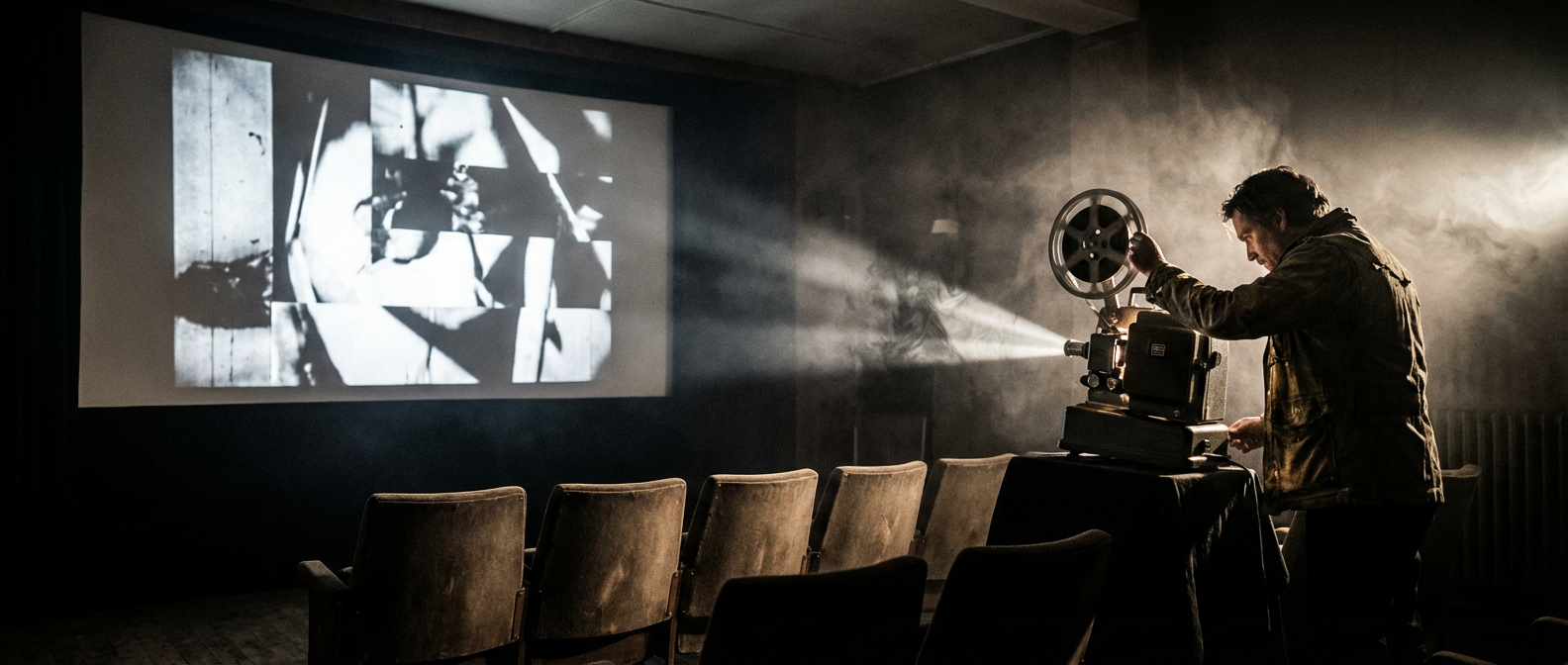
Stan Brakhage didn’t spend decades hand-painting film strips and documenting birth and death so his work could become homework for MFA students. Yet walk into any university film program and watch how quickly By Brakhage: An Anthology gets reduced to required viewing for “avant-garde techniques.” The reverence is killing the rebellion.
Look at what happened to John Cassavetes. Once a genuine outsider financing Shadows with poker winnings, now he’s safely tucked away as the “father of American independent cinema.” That title obscures something important. Cassavetes wasn’t trying to create a movement or establish techniques for film school curricula. He was trying to capture something immediate and raw that Hollywood couldn’t touch.

The Underground Went Overground
The real experimental cinema is happening right now on hard drives and phones, not in the hallowed halls where we worship Kenneth Anger’s Scorpio Rising. Sure, that 1963 masterpiece earned its reputation. But when did we decide that experimental cinema peaked sometime around 1975?
Here’s what bothers me: we’re so focused on preserving the past that we’re missing the present. Yeah, preservation matters. But when did we start thinking that what needs preserving represents the height of innovation? Artists like Ryan Trecartin are creating genuinely disorienting experiences that make Anger’s most surreal moments look quaint. Where are their retrospectives? Too messy, too immediate, too uncomfortably now.
This isn’t nostalgia talking. It’s about recognizing that experimental cinema works best when it’s genuinely experimental, not when it’s been theorized into submission by three generations of academics. The moment we can explain exactly why something is innovative, it’s probably stopped being innovative.
Distribution is Destroying Discovery
Here’s where things get really messy. The same platforms that democratized filmmaking have created their own forms of creative death. Instagram’s algorithm doesn’t care about your 16mm meditation on urban decay. TikTok isn’t interested in your single-take exploration of domestic space. The medium shapes the message, and the message is increasingly: make it fast, make it viral, make it now.
But some of today’s most interesting work is pushing back against these constraints. Artists like Ja’Tovia Gary are creating films that refuse easy categories, blending documentary techniques with experimental approaches in ways that feel genuinely urgent. Her 2018 film The Giverny Document doesn’t fit neatly into anyone’s definition of experimental cinema. That’s exactly what makes it essential.
The real tragedy isn’t that experimental films are hard to find. It’s that we’ve trained audiences to expect innovation to look a certain way. Hand-held cameras and non-linear narratives have become as conventional as three-act structures once were. We’re so busy looking for the next Chantal Akerman that we’re missing entirely different approaches to cinematic time and space.
The Dangerous Comfort of Academic Approval
Universities killed experimental cinema by making it respectable. Not intentionally, but inevitably. When Jordan Peele name-drops Maya Deren in interviews, when film festivals create “experimental” categories, when streaming services develop “avant-garde” sections, something essential dies in the translation.
The most important experimental work has always existed in opposition to something. Against Hollywood’s dream factory. Against television’s passive consumption. Against cinema’s inherited assumptions about narrative and time. But what do you oppose when opposition itself becomes an approved methodology?
I’m not arguing against education or preservation. I’m saying the experimental impulse thrives on necessity, not comfort. Hollis Frampton created Zorns Lemma because existing cinematic language couldn’t express what he needed to say. Today’s most interesting work emerges from similar frustrations with available tools and platforms.
Where Innovation Actually Lives
Real experimental cinema today isn’t happening in galleries or theaters. It’s in gaming environments where narrative assumes impossible spatial relationships. It’s in AR experiences that layer fictional elements onto documentary footage. It’s in collaborative online projects where authorship becomes genuinely collective rather than theoretically distributed.
Look at how artists like Ian Cheng are using AI and game engines to create autonomous worlds that evolve without human intervention. Or how collective groups like TOTAL REFUSAL are turning video game environments into spaces for documentary investigation. These approaches don’t fit our inherited categories for experimental cinema, which should be our first clue that they’re worth serious attention.
The mistake is thinking that innovation requires rejection of technology or embrace of lo-fi aesthetics. Some of the most genuinely experimental work happening now uses cutting-edge tools to create experiences that couldn’t exist any other way. The experimental impulse isn’t about medium purity. It’s about pushing against limitations, whatever those limitations happen to be.
So here’s the real question: are we ready to stop treating experimental cinema like a historical movement and start recognizing it as an ongoing practice? Because the most interesting work being made right now won’t wait for our approval, academic or otherwise. It’s already moving beyond our ability to categorize it, which is exactly where experimental cinema belongs.
